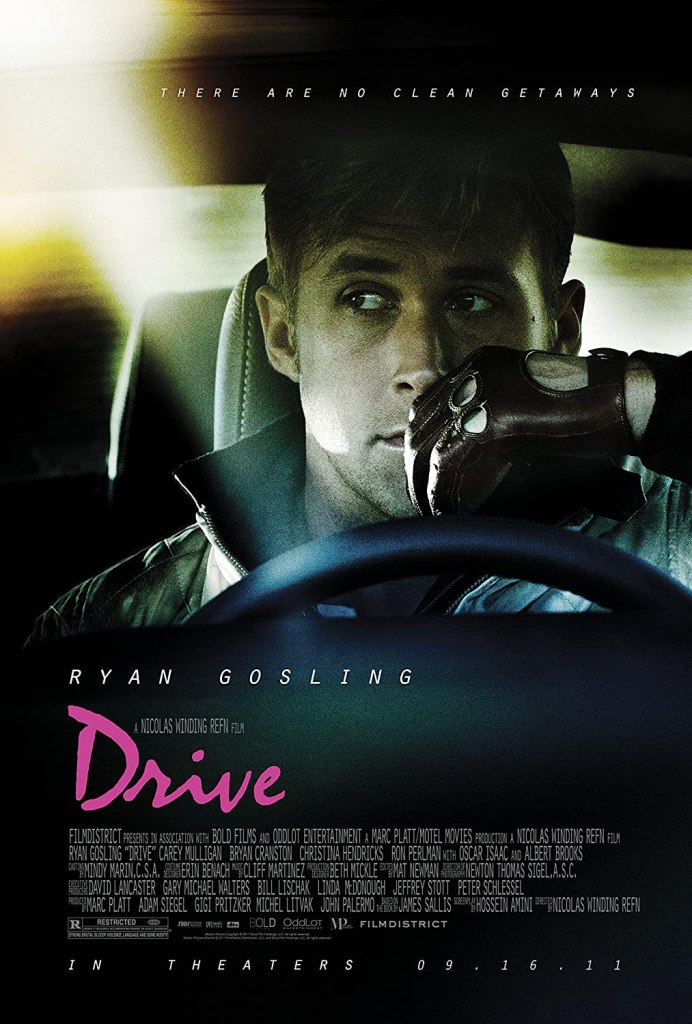
Drive was directed by Nicolas Winding Refn and released in 2011. Drive received massive praise at the Cannes Film Festival, including winning the award for “Best Director”. Ryan Gosling plays “Driver”, and he is a mechanic/stunt-driver during the day and moonlights as a getaway driver for criminals at night. He falls for his neighbor, Irene (Carey Mulligan) and he becomes close with her son, Benicio (Kaden Leos). After the man of the house, Standard (Oscar Isaac) comes home from jail, they get in trouble with the Los Angeles underground; most notably Bernie Rose (Albert Brooks) and Nino (Ron Perlman). After Driver offers to help them get out of a jam, something goes wrong and he ends up on the run with them.
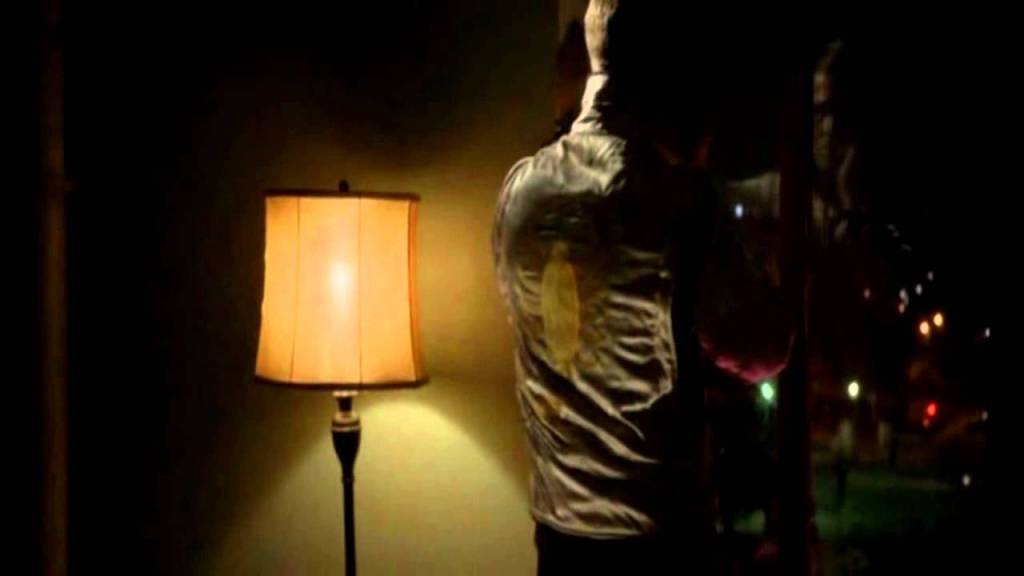
The directing in this film in on par with some of the greats of film, some shots reminding the audience of what Citizen Kane accomplished in film editing, specifically in one shot early in the film. Driver must do a stunt for a film and he needs to wear a mask to look like the lead, the camera sweeps on a mirror where the lead actor is getting worked on by the makeup artists, and when the mirror swings around the side, the audience sees a mirrored image of Ryan Gosling getting his makeup and hair done for the mask. There are a lot of long shots in this film, which itself is very impressive for feature films. On Driver’s jacket, there’s a large scorpion, and this along with this being a great idea for a getaway driver (being quick and efficient like a scorpion), it relates to the story of the “Scorpion and the Frog”.
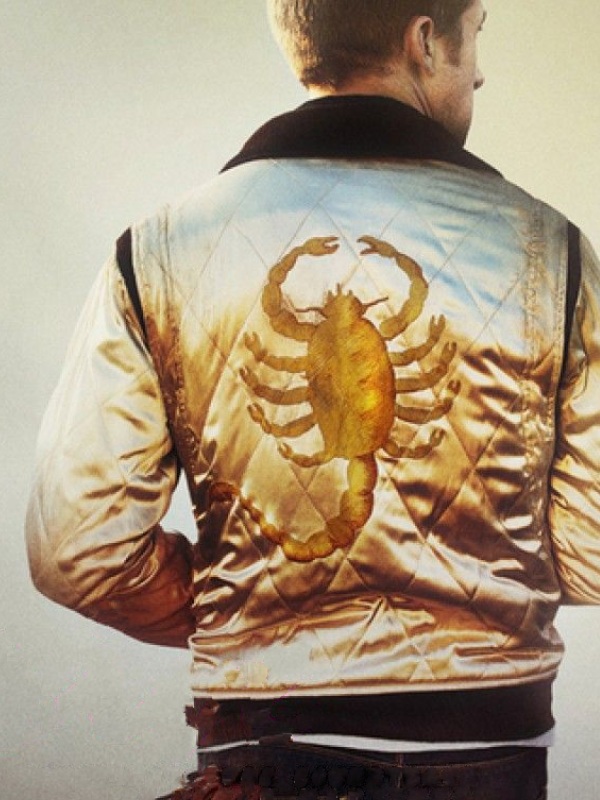
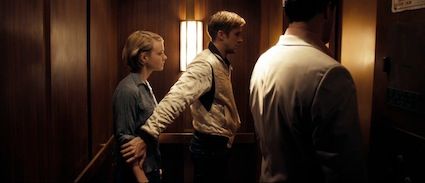
In the story of the “Scorpion and the Frog”, a scorpion asks the frog to help get across the lake, but the frog declines due to scorpions being known for stinging. The scorpion tells the frog that if the frog is stung, they’ll both die, so the scorpion gets no pleasure out of stinging the frog. Due to the scorpion’s nature, the frog is stung and they both die. Late in the film, Driver and his girlfriend, Irene, share a scene in the elevator with a nameless man, Driver notices the unknown man is armed. He slowly pushes Irene away from the man, turns around and kisses her before he beats the hitman to near death. After the beating, Irene is seen outside the elevator shocked at what she saw, and Driver looks back terrified as well. This relates to the story because Driver wants to change for Irene, but the job is his nature and he’d hurt her anyway.
The colors blue, yellow, and red are prominent in the film, as well. In close scenes with the villains, red is filling the screen, through the wall, clothes, and eventually blood. Late in the film when Driver makes a villain literally eat a bullet, we follow Driver to the villain’s place of work. At the villain’s place of work, the carpet, ceiling and mirrors all show a deep red color. This is the point in the film where Driver begins to lose everything, and all because of a phone call to Nino. The deep red shows how he is in hostile territory and is sinking deeper into a Hellish place he can’t get out of.
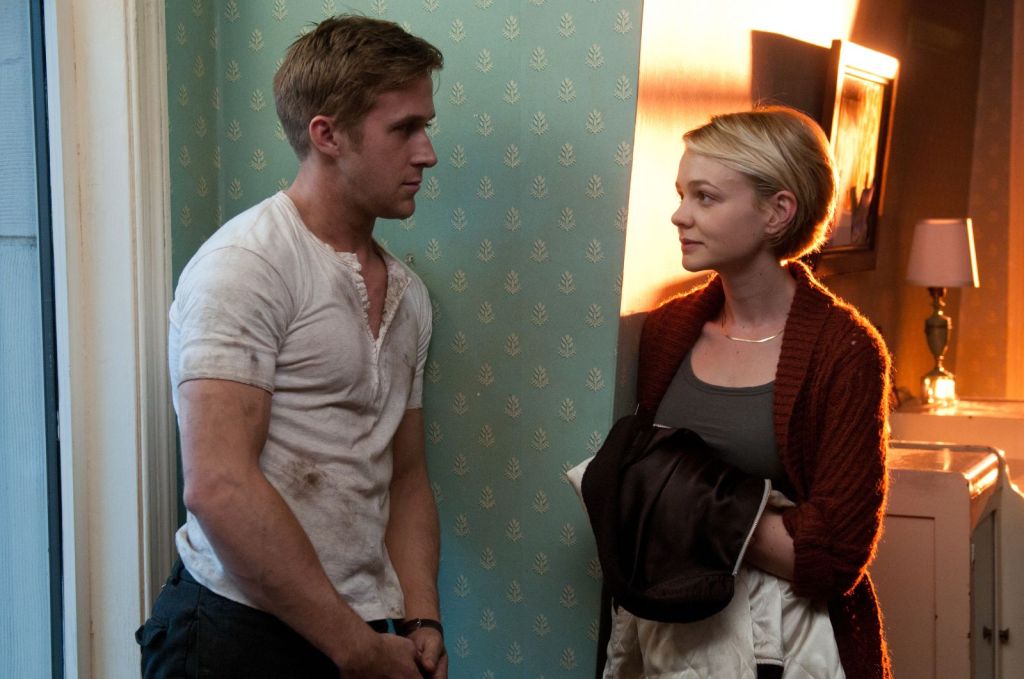
There’s an early scene where Irene, Benicio, and Driver are going for a car ride after Irene’s car breaks down; Irene’s sweater is a deep red, but after she gains an attachment to Driver, the sweater comes off, showing a blue shirt. When they go back to her apartment, the sweater is back on, possibly to symbolize she can’t break away from the looming danger forever, but she can for a short time. The song playing during this scene backs up the claim, “A Real Hero”, by College and Electric Youth: the song starts when Irene’s sweater first comes off and fades away when the film cuts to see her wearing it. This scene uses blue to show warmth for Driver, along with others.
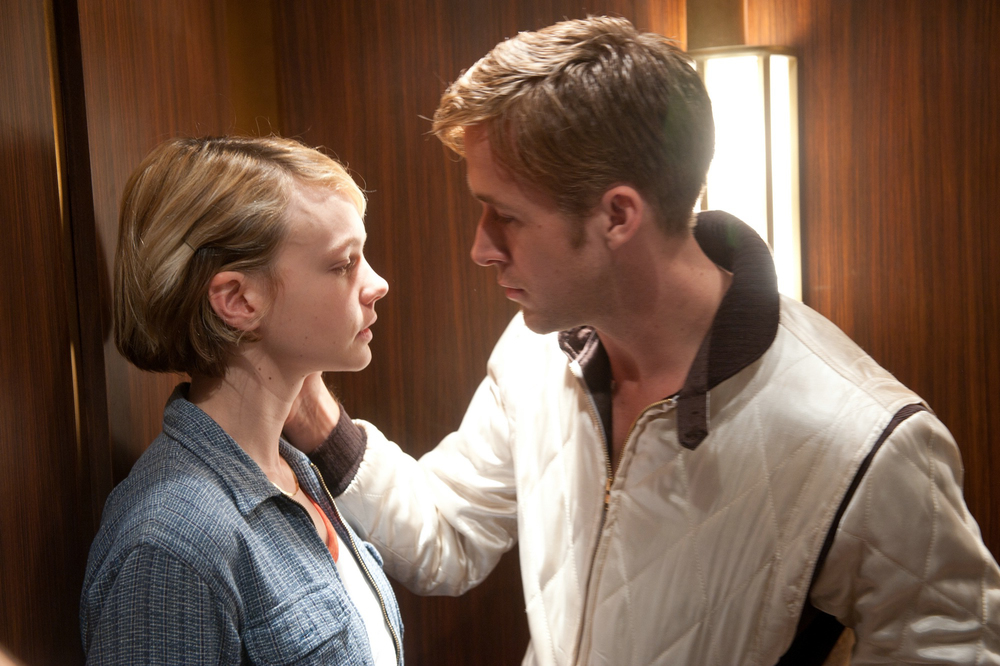

Blue is seen on the backgrounds that feel like home for Driver, especially his garage. In shots with Shannon (Bryan Cranston), the hue is overwhelmingly blue and soft, for example. Driver’s apartment and garage have a blue wall in the background. This is most likely to show where the heroes are, as opposed to the villain’s classic red. The only points the villains wear blue is when the audience sees them at their weakest; as humans who have bills to pay and don’t want to be caught.
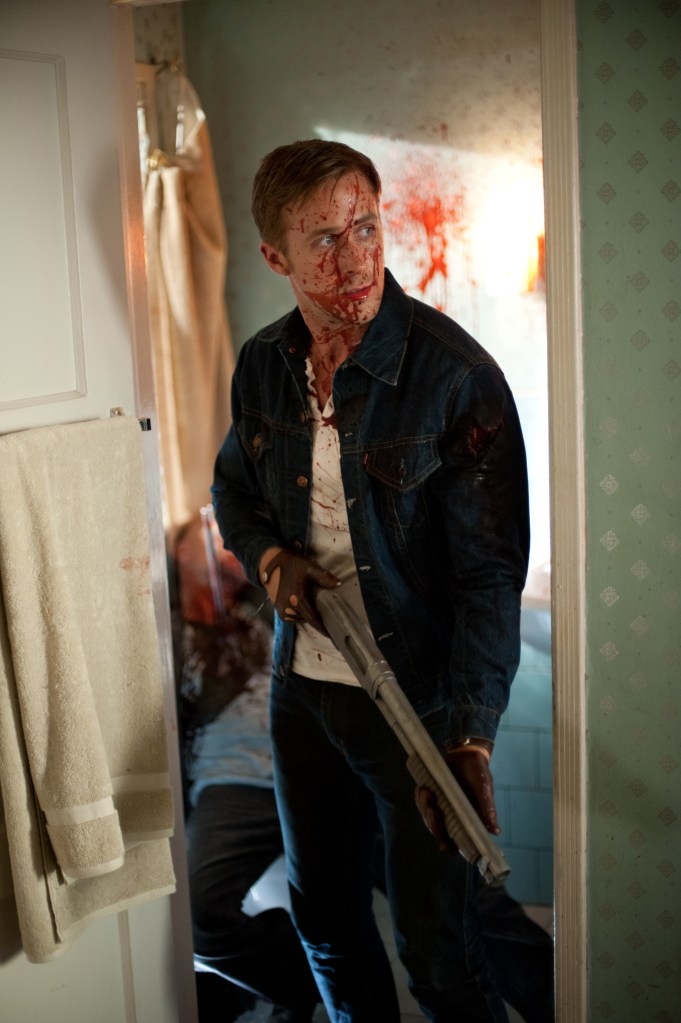
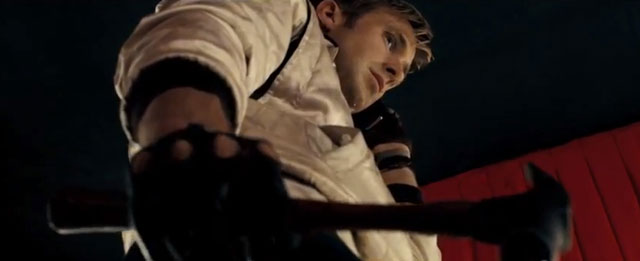
At two points in the film, Driver gets blood on him, like he was doused with it. When he doesn’t wear his trademark jacket, he wears a blue denim jacket. Still blue, yes. However, it’s a dark blue; almost black. During this scene, he kills two gangsters with a shotgun and is covered with blood. This happens again late in the film, Driver gets blood on his white jacket that doesn’t come off for the rest of the film, and this is possibly showing Driver’s true colors: he was never a real protagonist. Driver was never interested in killing or money, his love of cars and his ability to drive led him into this life and he couldn’t escape.
Yellow is used as more of a color for light and for emotions. The scorpion on Driver’s jacket is yellow and this is very vibrant, yes, but yellow is used in heavy scenes when there are shifts in character. This loops back to the screenshot I used a few paragraphs ago: Irene is contemplating her emotions while wearing the red sweater. During the elevator scene with Irene, Driver, and the hitman, it shows a yellow overtone on the film, emphasizing the change in Driver’s life and his emotions. After the death of Driver’s close friend, the car he gets his bag out of is yellow, showing a change in his heart to vengeance more than the hope of survival. When Nino is fearful after an initial brush with death, his face in shown with a yellow light source on it, until the shot cuts away to white headlights on him. After Driver commits his first two kills, his face is lit up as yellow until he turns the corner and his face is covered in a plain-colored hue and he’s out of frame.
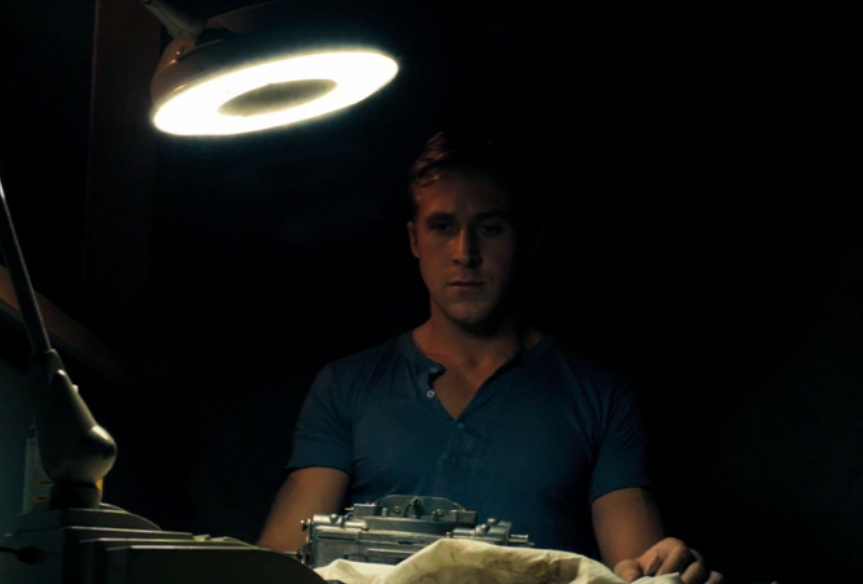
The sound Drive uses is impactful to the scenes as well. The use of more diegetic sound in the film lets the audience know about the thoughts of the characters. The song “Under Your Spell” by Desire plays in a muffled volume in Driver’s apartment at first, showing him working on a car part; the film cuts to a “welcome home party” at Irene’s apartment for Standard, where the song is playing normally; here we see Irene staring into the room and the camera zooms in on her while Standard gives a speech about being home; finally, it cuts back to Driver’s apartment where the song plays at full volume. After a moment of reflection, he decides to stop working and quietly leave his apartment. This simple use of sound suggests that our characters are connected even when their minds seem to be in different places: they’re thinking of each other. There’s another scene where sound is used to shock the audience and it’s done well.
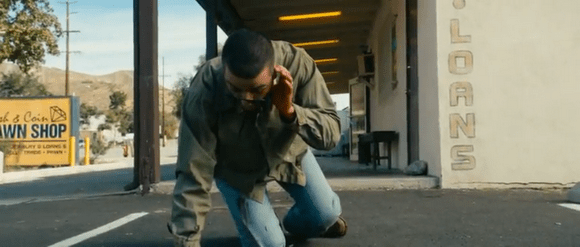
There’s one scene in the film where Driver and Standard go to hold up a pawn shop. Driver is waiting in the car for Standard’s return; Standard is seen walking out of the pawn shop in a calm manner, but then tragedy strikes. Standard is shot in the neck through the front window of the store, seeing this Driver gets out of the car and looks at his wounded friend. As Standard is crawling around, the shooter comes out of the store and shoots him in the back two more times. After this, Driver quickly drives away and is chased by mobsters. During this scene, it’s dead silent. The audience feels the anticipation as Driver does and is taken by complete surprise by the first gunshot. After that, most people would be in a state of shock and not hear what’s going on around them, focusing on the person who’s been shot, but after he’s shot to death, Driver regains his senses and does his job.
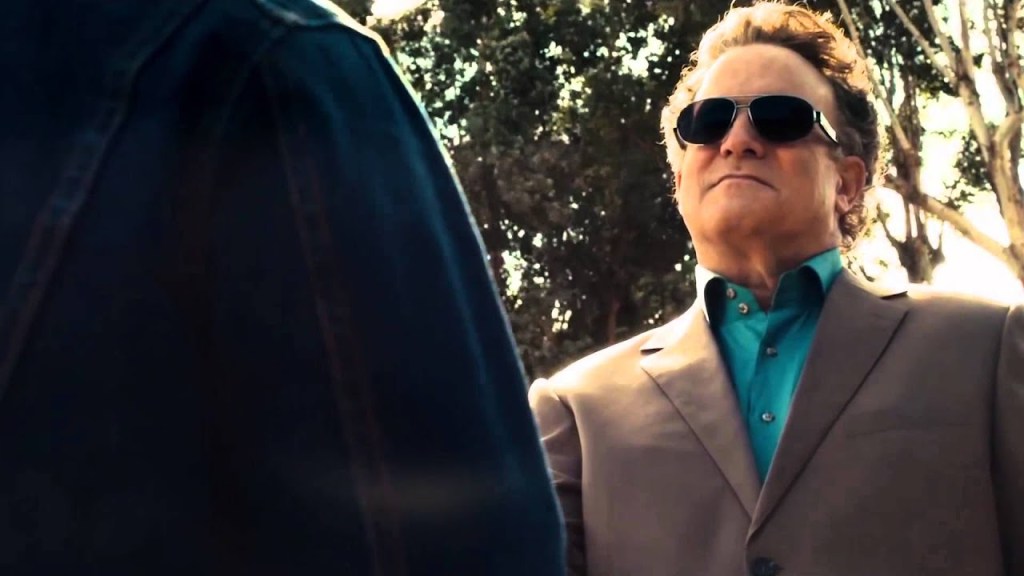
The writing is the film is well done, as well. We see simple exchanges have heavy meanings. Early in the film, Bernie Rose is asked to see Driver on the racetrack, seeing how they’ve never met before, they shake hands. In the exchange, Rose holds his hand out, Driver says, “I’m sorry, my hands are a little dirty,” and Rose keeps his hands out, coldly saying “So are mine,”. This may seem like simple banter, but to an audience it shows how uncomfortable Driver is shaking the hands of a mob boss with Gosling’s delivery on his lines. It also throws the audience a curve, because Bernie is wearing a blue shirt; surely, he must be a good guy. Or he’s at least coming to Driver on good terms, right? Well, Driver is wearing his denim jacket when meeting him, so we’re not out of danger.
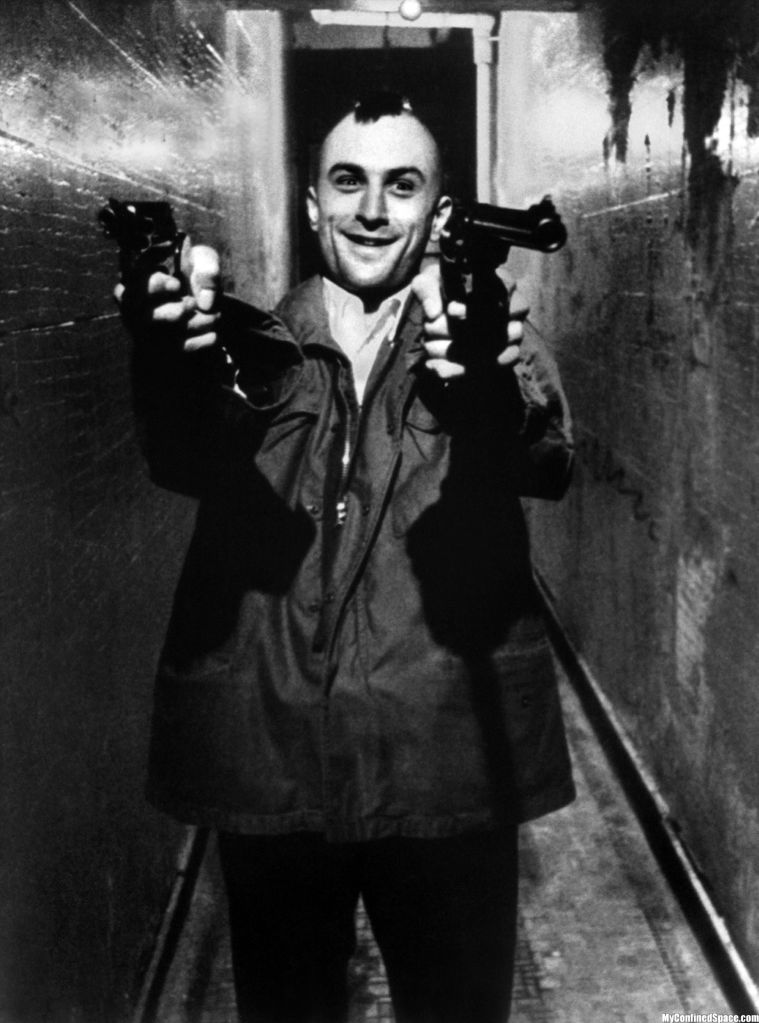
Driver also has very little to say in the film, offering the assumption that he is a very secluded man, like Travis Bickle in Taxi Driver. Not giving Driver much dialogue makes he’s a much more menacing character, and a relatable character for some. It could also be taken that Driver is mentally disturbed and wants to be a hero like in the old westerns, this could be backed up with the final shot of Driver driving into the night as the film ends: a cinematic callback to cowboys riding off into the sunset on horseback.
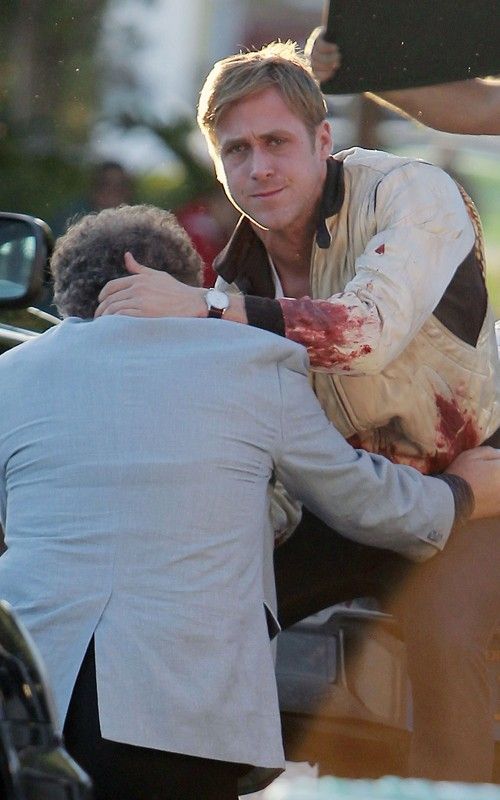
The end of the film combines all of these aspects in the last few shots before the credits: the shot pans up to Driver with all three colors on him: yellow from his clothes and the light, red from a stab wound in his stomach, and blue from his jeans. The song “A Real Hero” starts up as he puts the key in the ignition to drive off. It cuts to Irene knocking on his door to no answer, and she slowly walks back to her apartment through the red hallway. Then we see shots of Driver with red lights outside, blue lights on the dashboard, and yellow streetlights together with the blackness of night. After a few seconds of that, the film fades out to credits.
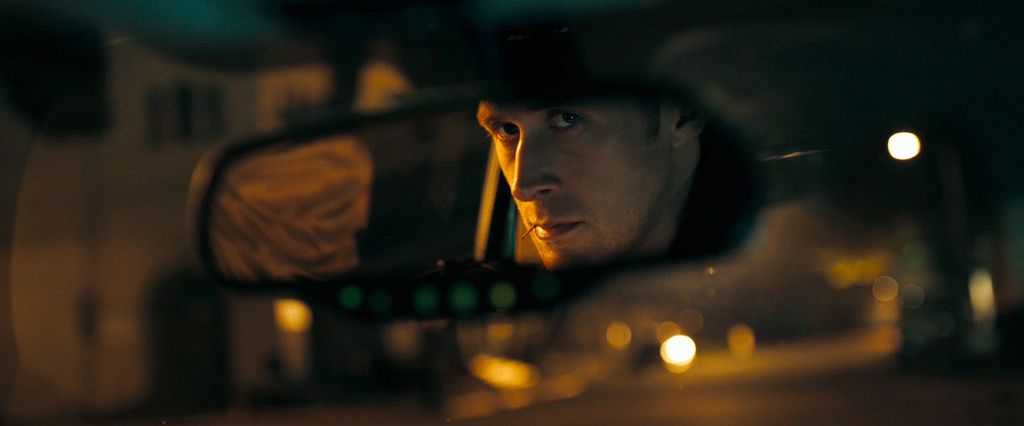
Drive is a fantastic movie that lets beginner film students explore how a film can truly be a work of art, as well as entertaining. The film itself is a very moving story of how someone can come into a person’s life and completely change them, but people can’t be saved from who they truly are. The film will use the different mediums to show the story and character development, the most interesting being through the colors and how they coordinate with events.
Drive is truly a landmark event in film-making, being a film that audiences need in a current time of only superhero films, but sadly it’s not a film audiences want right now. At it’s core, it’s a simple story of a man turning his ways to meet his conscience, but it’s done so tastefully that it’s its own entity as a film. The soundtrack by Cliff Martinez makes the film truly interesting and lively. This is very visible in the intro scene when “Tick of the Clock” plays as Driver lays out his rules and carries out his first getaway we see on-screen. The pulsing rhythm, the tense atmosphere, and the whole plot being planned so simply in front of the audience is genius. With the cast chosen, everything is believable, as well. I’d highly recommend anyone to watch it; it’s a slow burn, but it’s worth it. Whether for the artistic value, or the entertainment.
 Burnsy's Blog